Have you ever imagined your newly built swimming pool suddenly leaking and damaging the filtration system? Who should be responsible for the damage? Without a clear and structured warranty, all risks and costs could fall on you.
A warranty is not just a formality, but a form of technical and financial protection that guarantees the quality of a construction. More than that, a warranty also plays an important role in providing a sense of security to property owners. Therefore, before a pool construction project begins, it is important for you to know the types of warranties provided by the project contractor.
Main Types of Warranties for Swimming Pools
In construction projects, swimming pool contractors generally provide several types of warranties that cover structural aspects, installation, materials, and finishing. The following is an explanation of each type of warranty for swimming pool construction:
- Structural Warranty (Leak-Proof)
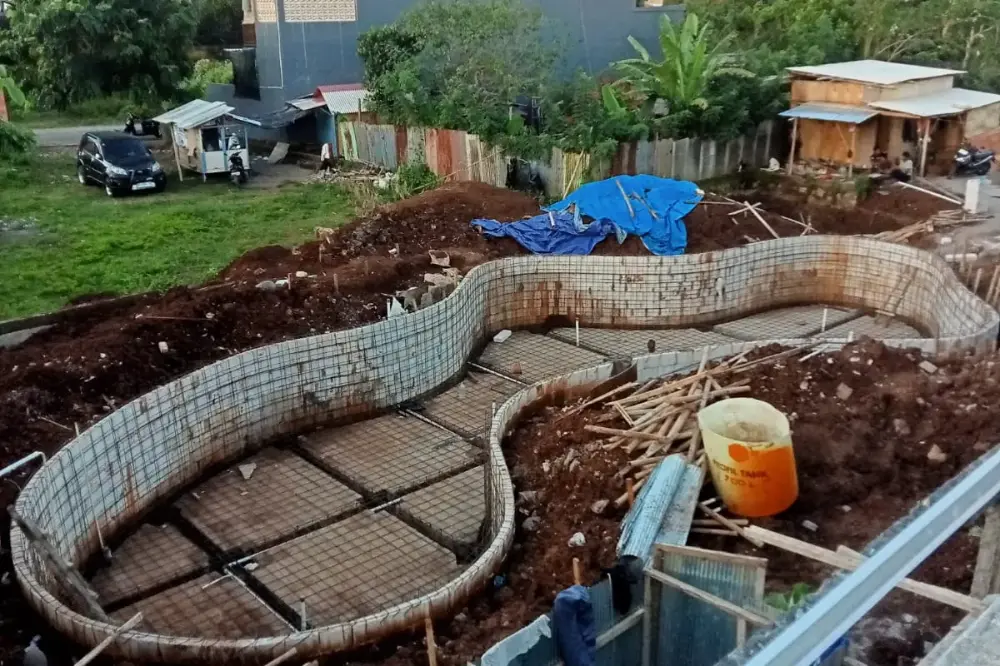
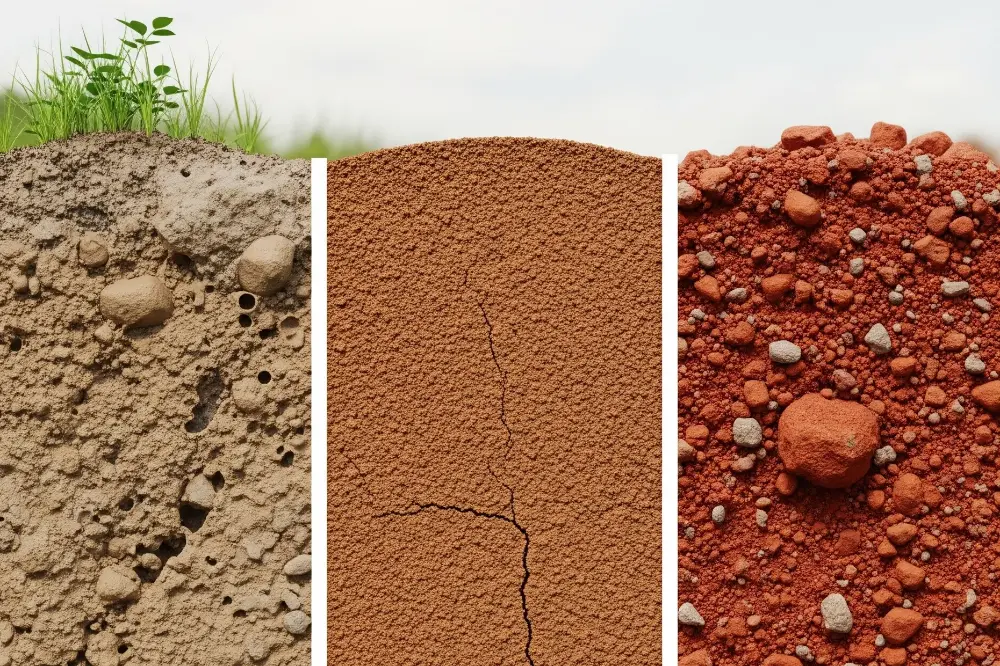
A structural warranty is the most important type of warranty in a swimming pool construction project. This warranty covers cracks and leaks in the pool body (concrete or fiberglass structure) and guarantees that the pool will not shift due to incorrect soil analysis. Structural warranties have the longest validity period, ranging from 5 to 10 years, with some even offering up to 15 years, such as the structural warranty at Bali Arsitek. - Installation and Equipment Warranty
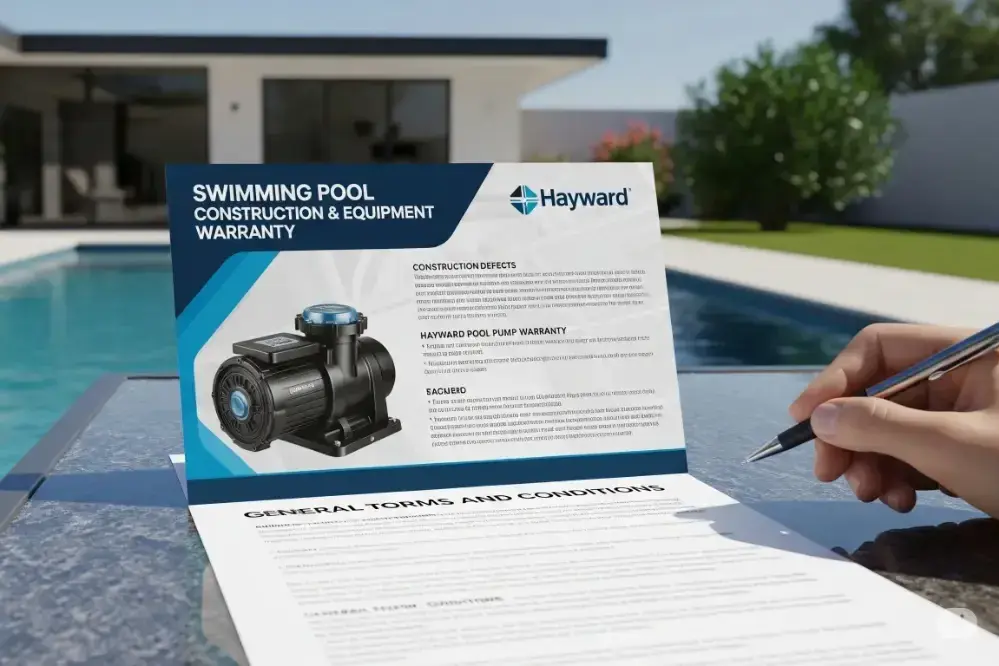
The installation and equipment warranty protects pool owners from installation errors and mechanical system damage. Components covered by the installation warranty are active components such as pumps, filters, heating systems, and automatic controls. This type of warranty is usually separate from the structural warranty. The typical duration of this warranty is 1-2 years, depending on the equipment manufacturer's warranty. An important point of this warranty is that the contractor is responsible for the cost of replacement and installation if damage occurs during the warranty period. - Material and Finishing Warranty
The material and finishing warranty is the warranty with the shortest validity period, which is approximately 1 year. This material and finishing warranty guarantee the quality of the materials used to be free from manufacturing defects. In other words, this warranty focuses on the composition and durability of the material itself, not how it is installed.
What to Consider in Warranty and Contract Documents
After selecting the appropriate warranty, you need to pay attention to several important aspects in the documentation and contract so that the protection you receive is truly effective:
- Warranty Period
Each warranty has a different duration. Structural warranties have the longest duration because structural damage often appears after several years. Meanwhile, installation warranties cover active components that can be tested directly during commissioning. Unlike the two warranties above, material warranties have the shortest validity period because they depend on the policy of the material manufacturer. - Warranty Coverage
Ensure you understand in detail what components are covered by each warranty. That way, you will know what is covered and not covered by the warranty you choose. - Warranty Claim Procedure
The warranty claim procedure must be designed to be efficient, contract-compliant, and well-documented. This is important because it concerns the technical and legal responsibilities between the project owner, contractor, and manufacturer. Claims that do not follow the procedure may be rejected even if the damage has actually occurred. - Terms and Conditions
Before making a claim, carefully read the warranty terms and conditions. These points may determine whether the damage can be handled at no additional cost. Claims that do not meet the requirements are often rejected, so it is important for you to know the things that can void the warranty.
Tips to Ensure Your Warranty is Valid
To avoid any problems when claiming your warranty, here are some tips from Bali Arsitek that you can apply:
- Keep All Swimming Pool Construction Documents
Keep all important documents such as contracts, invoices, and warranty sheets in a safe place. You will need all of these documents when you want to claim a warranty. Put them in a place that you consider safe and easy to find. - Engage in Communication with Contractors
Good communication with your pool contractor will facilitate the claims process and prevent conflicts from arising. Document any issues that arise as evidence and maintain a positive professional relationship. - Perform Proper Maintenance for Your Swimming Pool
Regular maintenance is not only about maintaining the performance of the swimming pool, but also providing evidence that damage is not the result of user negligence. This is very important when filing a warranty claim, as contractors will always evaluate whether the pool and system have been maintained according to standards.
Conclusion
Warranties are an important element in swimming pool projects, both for contractors as service providers and for owners as users. In swimming pool construction, there are several warranties that pool owners can choose from. These warranties have different coverage and validity periods, ranging from the longest (structure) to the shortest (materials).
One swimming pool contractor that offers a long-term warranty is Bali Arsitek (15-year warranty period), which has successfully completed various swimming pool projects in Bali and around the region. By understanding and managing your warranty properly, you can protect your swimming pool from financial risks in the future.