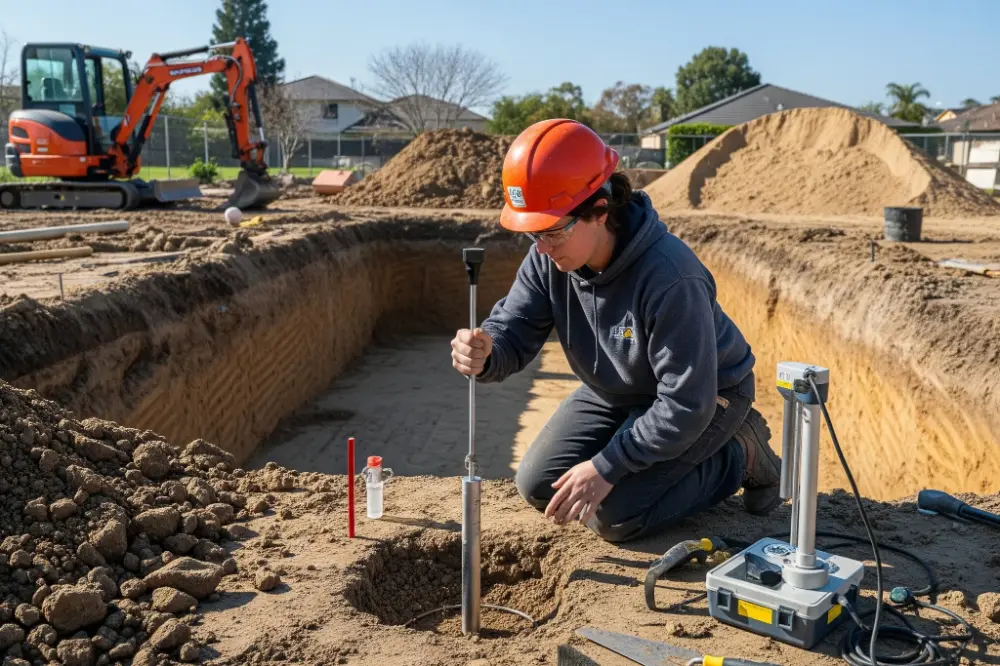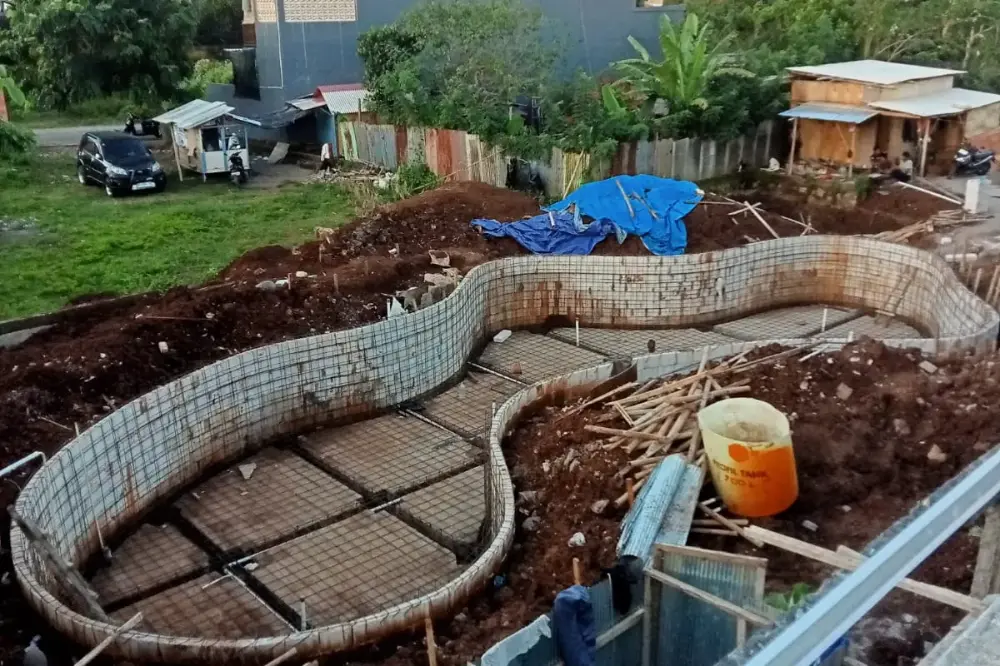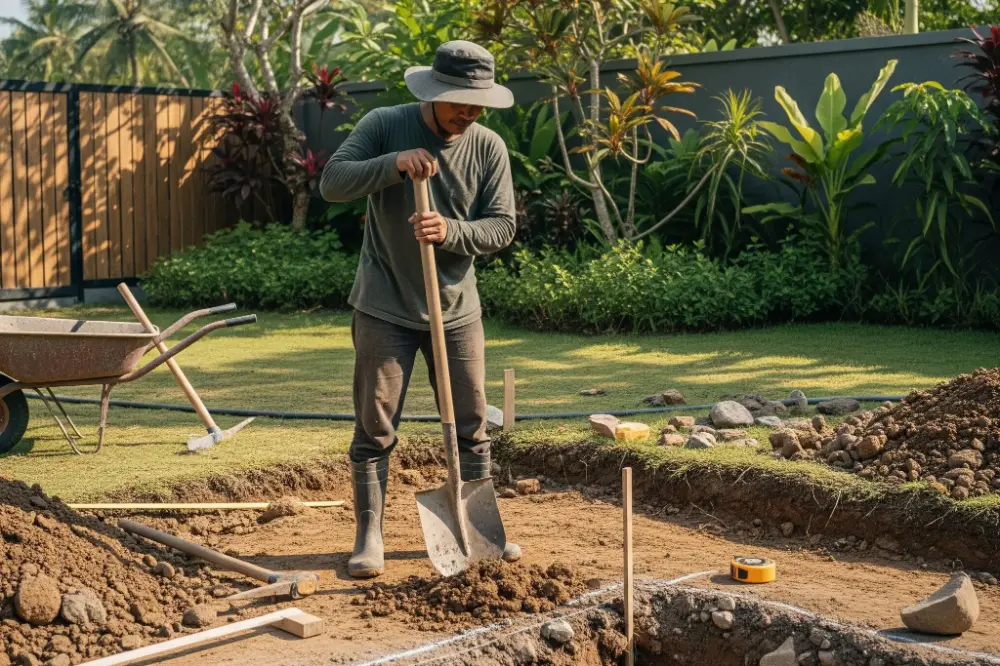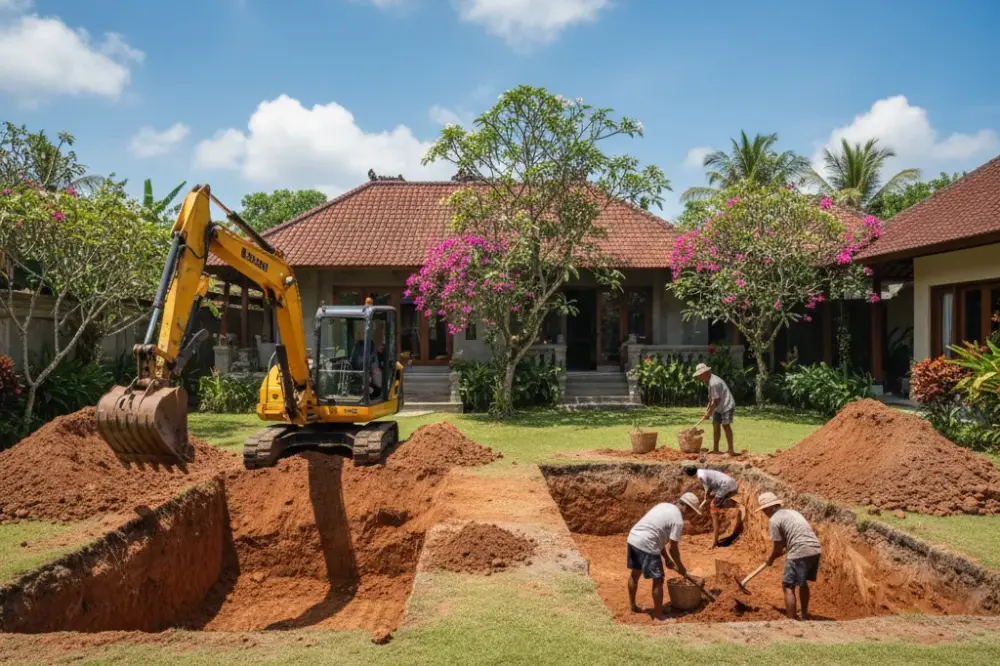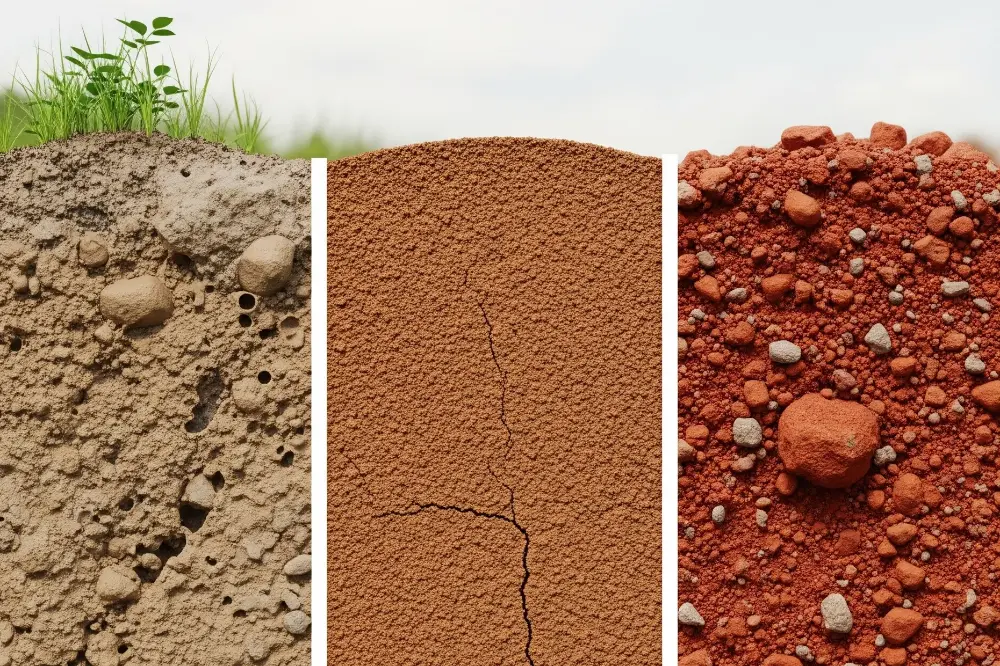
Before building a swimming pool, one important thing to consider is the condition and structure of the soil at the site. Strong and stable soil structure is the ideal foundation for supporting swimming pool construction. By choosing good soil structure, you can ensure that the swimming pool you build will be safe and have a more solid foundation. In addition, choosing the right soil can minimize problems and damage in the future.
In this article, Bali Arsitek will share information about the ideal soil characteristics and recommended soil types for swimming pool construction.
Ideal Soil Characteristics for Swimming Pool
The stability of a swimming pool structure is highly dependent on the characteristics of the soil beneath it. Therefore, it is important to identify the appropriate soil characteristics before beginning construction on a particular land. The following are ideal soil characteristics for swimming pools:
- Solid & Stable Soil
Solid and stable soil is very important for swimming pool construction. This is because solid and stable soil can support the weight of the structure without subsidence or shifting. In addition, solid soil facilitates the construction process, strengthens the pool foundation in the long term, and can reduce the need for additional reinforcement. - High Land Support Capacity
The right soil for building a swimming pool is soil that can support the weight of the pool structure, water (± 1 ton/m³), and surrounding activities. Ideally, the soil should have a minimum bearing capacity of 1.5–2 kg/cm² (approximately 150-250 kPa) to prevent the pool from sinking or shifting. - Not Prone to Landslides
Land not prone to landslides is the main foundation for building a safe and sturdy swimming pool, especially on sloping land. Therefore, it is important to pay attention to the appropriate soil contours before building a swimming pool on sloping and cliffy land. This is to anticipate landslides, soil shifts, and major damage in the future.
Recommended Soil Types for Swimming Pool
After understanding the ideal soil characteristics, we need to consider the right type of soil for building a swimming pool. Here are some recommended types of soil, along with their advantages and disadvantages:
- Sandy Clay
Sandy clay soil is one type of soil that is suitable for building swimming pools. This soil has a combination of cohesive particles and porous sand. This type of soil is quite stable and has moderate drainage, so it can support the weight of the pool while reducing the risk of hydrostatic pressure from below.
Advantages:
- The combination of clay and sand creates dense, stable soil that can support the weight of the pond.
- It has good drainage properties, preventing water from pooling under the pond.
- The sand mixed into the clay reduces the risk of cracking and landslides when the soil is wet.
- This soil surface provides a good foundation for liners, concrete, or waterproof membranes.
- Extra compaction is needed in areas with high rainfall to prevent land subsidence.
- An additional drainage system is needed to prevent water from being trapped in the clay layer and reduce pressure from below.
- Clay (Pure Clay)
Clay has unique properties in the context of swimming pool construction. The fine particles in clay have high binding power and are able to absorb water well. This can be very advantageous in certain conditions, but it can also pose technical challenges that need to be overcome.
Advantages:- It has low permeability, which helps prevent water seepage from ponds.
- Its high binding power provides structural stability when the soil is dry.
- Poor drainage can cause hydrostatic pressure from below.
- The soil tends to be sticky, requiring special compaction techniques to ensure stability.
- It is sensitive to moisture; when wet, the soil expands, while when dry, it shrinks, potentially causing cracks in concrete structures.
- Laterite Soil
Laterite soil is a type of soil formed from the weathering of rocks rich in aluminum and iron. This soil is ideal for building swimming pools because it has a dense texture and high bearing capacity.
Advantages:- It has high bearing capacity, making it ideal for supporting concrete pools without the risk of land subsidence.
- Once compacted, laterite soil will not easily collapse or shift.
- Resistant to erosion.
- It can be compacted and leveled with simple tools to form a strong foundation.
- Drainage needs to be considered because this soil can become waterlogged during heavy rains.
- A separating layer or additional drainage system is needed to maintain moisture stability.