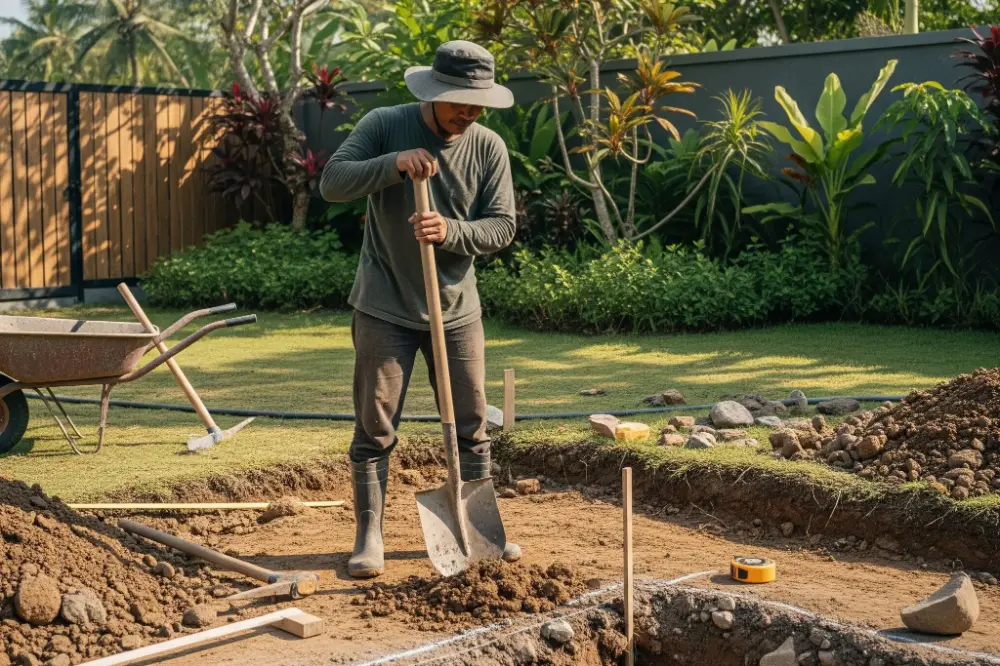
The foundation of a swimming pool is a crucial element that is often overlooked in the planning and construction stages. However, the strength and long-term durability of a pool is determined by the quality of its foundation. A solid foundation depends not only on the structural design but is also greatly influenced by the soil conditions at the construction site. Careful soil analysis and selection of the appropriate foundation method are therefore essential first steps that should not be overlooked.
In this article, Bali Arsitek will share information and provide an in-depth review of the types of soil that are less than ideal for swimming pool construction, along with the risks that may arise. This guide is designed to help you identify potential problems early on, so you can prevent cost overruns and structural damage in the future.
Soil Types to Be Avoided for Swimming Pools
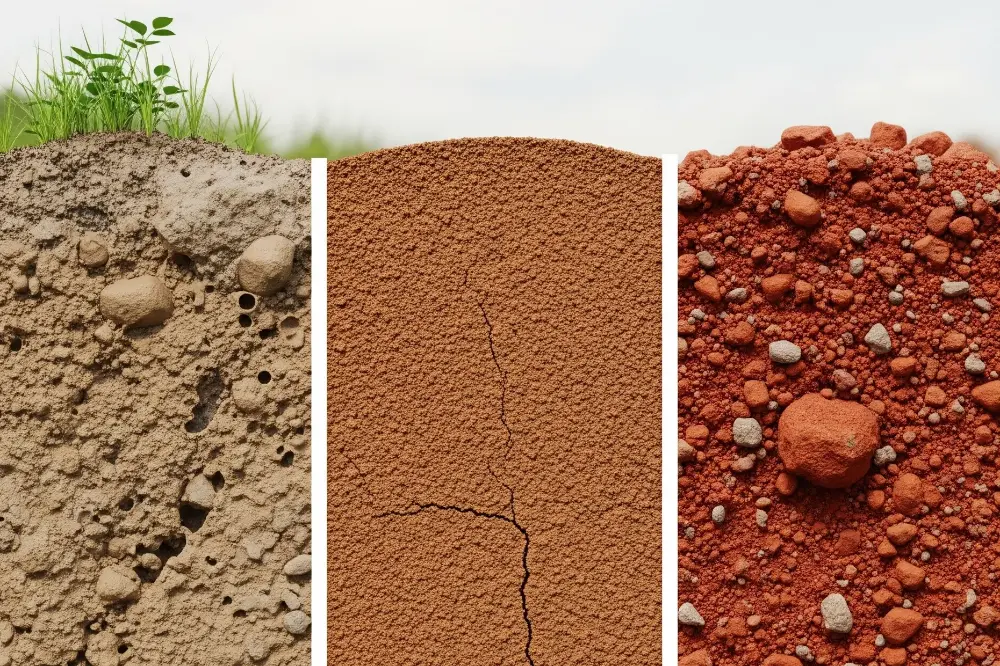
Before starting construction, it is important to know several soil types that are unsuitable for swimming pool construction. The following is a review of several soil types that should be avoided, along with the potential risks that may arise if they are used as the foundation for a swimming pool:
- Clay Soil
Characteristics:
Compact clay soils with low absorbency generally have a very dense structure and limited micro-pores. Because clay particles have high cohesive properties, these soils tend to be impervious to water and air. As a result, infiltration is slow and drainage is poor.
Risk:
Clay soil has physical properties that change drastically depending on its moisture content. When wet, clay soil absorbs water and expands significantly. Conversely, when dry, this soil shrinks and hardens. This cycle of expansion and shrinkage creates unstable lateral and vertical forces around the pool structure. As a result, uneven pressure can push against the pool walls, causing cracks, structural shifts, or even damage to the waterproof layer. - Sandy Soil
Characteristics:
Sandy soil has a loose texture, low binding power, and is prone to shifting. In addition, this soil has high porosity, allowing water to easily seep through and causing instability in the foundation structure. Without special compaction, this type of soil risks causing damage and lowering the elevation of the pool over time.
Risk:
The use of sandy soil in swimming pool construction is high risk due to its unstable and easily shifting nature. Its low binding power can make the pool foundation prone to subsidence, cracking, or leakage. In addition, water easily seeps through the pores of the sand, which can compromise the stability of the structure and accelerate damage to the waterproofing system. - Peat (Organic Soil)
Characteristics:
Peat soil is a type of soil rich in organic matter resulting from the decomposition of vegetation. It tends to be dark in color and has a distinctive odor. Its texture is light, like a sponge, enabling it to absorb and retain large amounts of water. However, due to its soft structure and compressibility, this soil has low bearing capacity and poor stability for construction.
Risk:
Because it is rich in organic matter, peat soil can naturally shrink continuously. This can pose a serious risk to the construction of swimming pools. When peat soil decomposes and dries out, its surface can gradually sink, causing structural shifts, increasing the potential for leaks, and causing long-term deformation. - Karst Land
Characteristics:
Karst soil is a type of soil created from the weathering of limestone, giving it unique characteristics such as an uneven surface and a complex underground drainage system. Due to the soluble nature of limestone, this soil is highly susceptible to the formation of cavities, passages, and caves beneath the surface.
Risk:
This type of karst soil poses a major risk to swimming pool construction, particularly the potential for sudden soil collapse or sinkholes. If the cavities formed beneath the ground surface collapse suddenly, the entire swimming pool structure will sink, causing total damage and endangering safety. This risk makes karst soil a highly critical zone, requiring in-depth geotechnical surveys before construction can begin.
Problems Arising from Poor Soil Conditions
The problems that can arise due to poor soil conditions that are unsuitable for swimming pool construction are:
- Structural Damage
Caused by unstable soil conditions, such as movement, shrinkage, or shifting of soil layers beneath the structure. When the soil undergoes volume changes due to fluctuating water content or loose composition, uneven pressure can occur on the concrete structure. This can potentially cause cracks in the pool walls and floor, and even cause pipe joints to break and come loose. These cracks not only detract from the aesthetics but can also reduce the overall durability of the construction. - Leaks That Are Difficult to Repair
Soil with low bearing capacity is expansive, or prone to movement, which can create micro-cracks under the pool structure. These cracks allow water to seep out without being visible to the naked eye. As a result, leaks in the pool are only identified after a decrease in water volume or damage to the system. Repairing such leaks often requires partial demolition of the structure, geotechnical investigation, and special injection methods, which are certainly time-consuming and costly. - Construction Cost Overruns
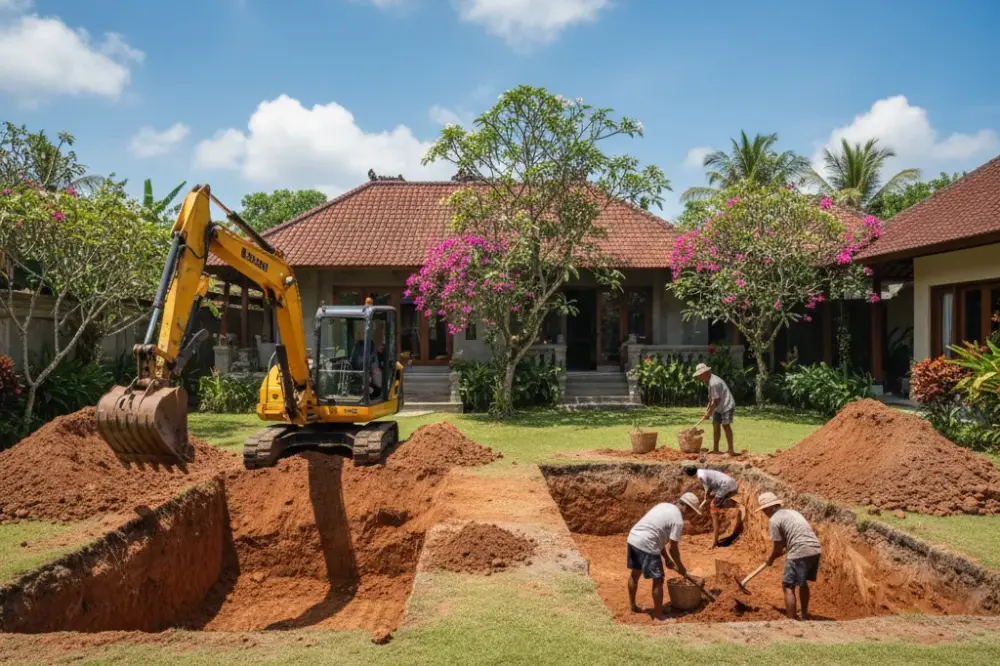
If contractors encounter unsuitable soil types during the swimming pool construction process, they must perform additional work. This includes reinforcing the foundation, special casting, or deeper excavation. These steps are necessary to ensure the stability of the structure, but they will significantly increase construction costs and extend the duration of the work.
Conclusion
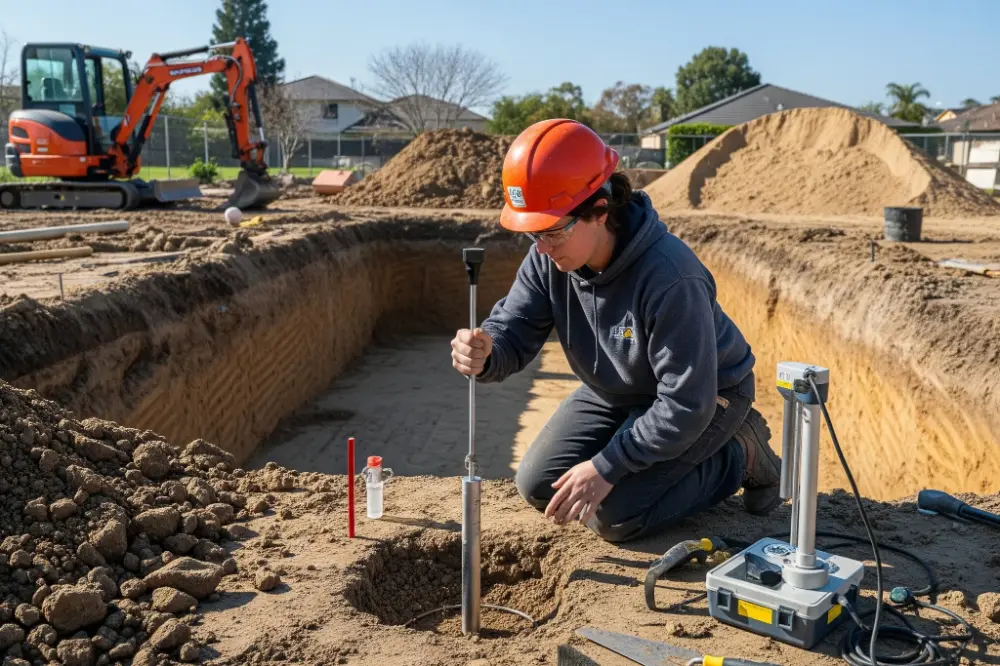
Soil conditions are a critical factor that greatly influences the success of swimming pool construction. Soil stability, bearing capacity, and physical characteristics will determine the durability of the structure, the effectiveness of the waterproofing system, and the risk of long-term damage. Conducting soil testing before construction begins is not just a technical step, but an important investment to ensure the safety, comfort, cost efficiency, and longevity of the swimming pool being built.
By understanding and identifying the right type of soil, you will not only save money, but also ensure that your swimming pool is sturdy, safe, and durable.