Swimming pools that are frequently used unknowingly accumulate a lot of dirt from our own bodies, as well as other dirt that gets into the pool water. This can affect the quality of the pool water, our comfort while swimming, the lifespan of the pool itself, and can even affect our health. Therefore, maintaining the cleanliness and quality of the pool water is a priority for pool owners and users alike.
Therefore, it is very important for us to know the indicators of declining water quality in swimming pools, the causes of declining water quality in swimming pools, and when we should replace the water in swimming pool.
Signs of Declining Swimming Pool Water Quality
We can see the decline in water quality in swimming pools from the following signs:
- Water Color Change
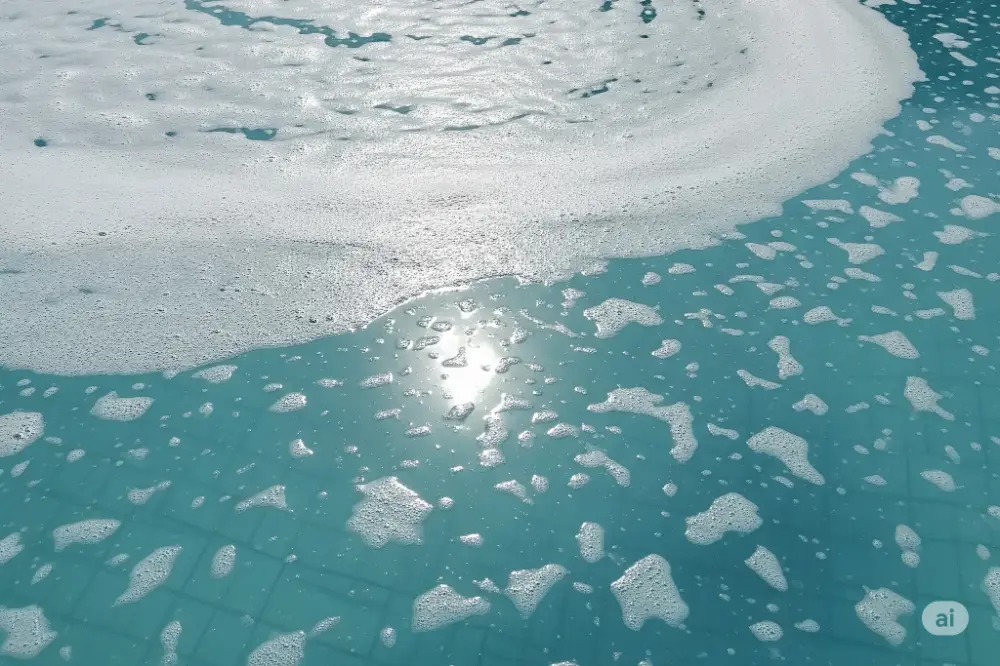
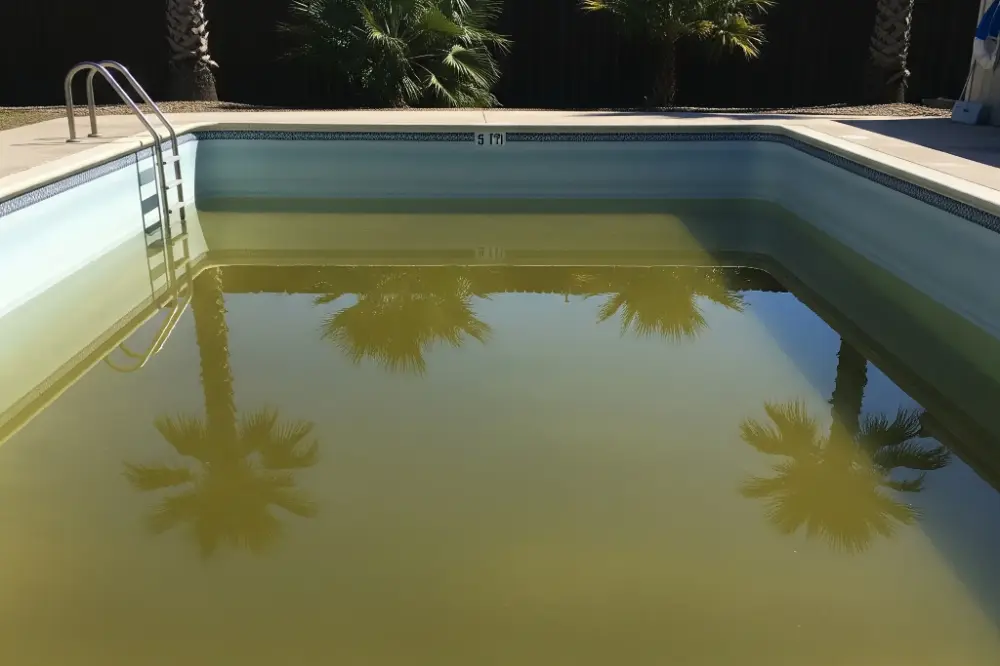
Good swimming pool water is generally clear blue. If the pool water starts to turn greenish, it is a sign that the water quality has deteriorated. Do not wait until the pool water turns grayish black, as this could indicate that the water has been severely contaminated. - The pool water smells bad
A strong chlorine smell can be a sign that the pool water needs to be changed immediately. This can happen because chlorine reacts with dirt (urine, sweat, etc.) and forms chloramines that cause a pungent odor. In addition, pool water that needs to be changed will smell like dirt and rotten eggs. - Skin or eyes are irritated
Have you ever experienced irritation in your eyes or skin shortly after swimming? Well, that's a sign that the pool water you're using needs to be changed immediately. Pool water that hasn't been changed can become a breeding ground for bacteria and microorganisms that can irritate the skin or eyes when we swim. - Damage to equipment and pool surfaces
The decline in swimming pool water quality not only affects the health of pool users, but can also affect the equipment and surface of the pool itself. High chlorine levels and unbalanced pH levels can accelerate corrosion on metal equipment (ladders, filters, pumps, and heaters). In addition, if the water contains a lot of mineral deposits, it can cause white stains on the pool tiles that are difficult to clean. - Difficulty balancing chemical levels in water
Balancing chemical levels in swimming pools can be a major challenge when pool water quality begins to decline. Several factors can make this process difficult, such as the accumulation of organic contaminants (algae, leaves, and body waste) that cause chemicals such as chlorine to be depleted quickly as they must neutralize everything. In addition, extreme pH levels in the water can cause chlorine to not function optimally.
Causes of Declining Swimming Pool Water Quality
The quality of water in swimming pools can deteriorate due to several influencing factors. These factors can be natural or related to the condition of the swimming pool equipment itself.
- High air and water temperatures
Higher air or water temperatures cause algae and bacteria to grow faster. This is because algae and bacteria thrive in warm temperatures. Rapid growth of algae and bacteria in swimming pools can reduce water quality. - The intensity of sunlight directed at the swimming pool
The intensity of sunlight hitting the pool, especially UV rays, can break down the free chlorine contained in the pool water. When chlorine levels decrease, the effectiveness of water sanitation in the pool decreases. - Heavy rainfall
Heavy rainfall falling into swimming pools can bring dust, pollutants, algae spores, and even leaves. In addition, rainwater has a lower pH (more acidic), causing the pH level in the pool to change. - Humidity around the pool
High humidity can support the growth of microorganisms around the pool and on the water surface. It also plays a role in the growth of algae and fungi, which can then affect the water quality in swimming pools. - Dust and small particles
Dust and small particles, especially during the dry season, are easily blown by the wind, which can increase the potential for swimming pools to become dirty quickly. - Swimming pool filtration problems
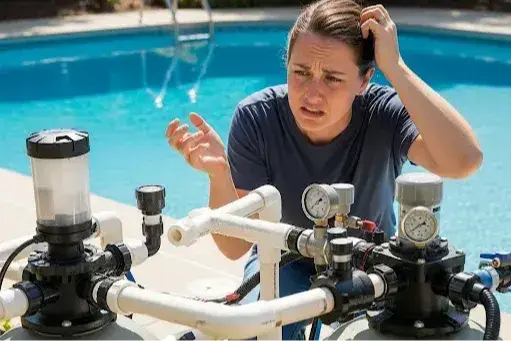
A poorly functioning pool filter can cause the water filtration process to be less effective, resulting in suboptimal water cleaning. As a result, the chemical load in the water increases, making it difficult to control the chemical balance in the pool.
When Should Swimming Pool Water Be Replaced?
Replacing all of the water in a swimming pool does not have to be done frequently. There are certain times when the pool water must be replaced in order to maintain water quality and safety. The estimated time for replacing pool water is approximately once every 1-2 years. This is recommended when the pool is regularly maintained properly. If the filtration system, water pH, and chlorine are maintained properly, the water will last quite a long time.
In addition, there are several indicators that determine when swimming pool water should be replaced, such as:
- Total Dissolved Solids (TDS) are too high
TDS above 1,500-2,000 ppm can prevent chemicals from working optimally, making it difficult to chemically balance the water and resulting in poor water quality. - The water is severely contaminated
Contamination such as algae blooms, extremely cloudy water, and a very strong odor requires you to immediately change the pool water. In such cases, regular maintenance is not enough to solve the problem, so it is necessary to completely change the pool water. - Recurrent irritation of the skin and eyes
If there are signs of irritation when using the pool, it is highly recommended to change the pool water. A thorough check should also be carried out to ensure that the pool is free from contamination. - There is stubborn crust or mineral deposits on the surface of the pool
Water that contains too many minerals can cause stubborn white or gray stains. Changing the pool water can help solve this problem.
Conclusion
That concludes our article on signs that your pool water needs to be replaced. We hope this article has given you an insight into the current condition of your pool water. If you are looking for pool maintenance services, including pool water refilling, please don't hesitate to contact Bali Arsitek.